Arguments About the True Meaning of Christianity Are as Old as Christianity Itself
Arguments about the true meaning of Christianity are as old as Christianity itself. One simple example from the Gospel of Matthew illustrates this point. Jesus asked his disciples, “Who do people say the Son of Man is?” Surprisingly, the people who had heard Him speak for several years didn’t give the same answer.
We now know that a group of Christians called orthodox won the debate. They defined the meaning of Christianity. Their victory seems obvious looking back particularly from Matthew’s point of view. Matthew has Peter answering very clearly, “You are the Messiah, the Son of the living God.”
That answer became critical to defining not only orthodox Christianity, but it also shaped the structure of Christian assemblies to follow. Jesus bestowed on Simon a new name and granted him extraordinary powers.
If we only look at this document, one would never see the extraordinary diversity in early Christianity. The diversity is right there in the gospels themselves. We have four canonical or orthodox Gospels. They provide very different views of Jesus with contradictory facts. Historical research also shows that there were many other Gospels that early orthodox Christians excluded.
We know from other types of documents outside the Gospels that followers of Jesus organize themselves in local assemblies. The Greek word for assembly is Ecclesia. These assemblies recognized an elder (bishop) or group of elders as their guides. They gathered on the first day of the week to celebrate the Feast of the Body and Blood of the Risen Christ.
This “Eucharist” or celebration, eating the body and drinking the bread of Christ, healed their soul. It empowered them to love their neighbor. Without access to the body and blood of Christ a believer would quickly fall back into the old selfish lifestyle of the Greco-Roman world. This first “sacrament” eventually evolved into seven sacraments.
Rome had one of these orthodox communities. According to tradition, Peter and Paul helped shepherd the organization and development of the early ecclesiae in and around Rome. According to tradition both died a martyr’s death in Rome. The Roman Church then had a special founding by both early Christian missionaries.
Historically speaking, it took another 300 years for the Bishop of Rome to solidify his role as the successor of Peter and the leader of a Roman Catholic Church. It was Roman because the bishop, or elder, of Rome resided in Rome. It was Catholic because it asserted a universal teaching about the nature of Jesus and the rituals to empower Christian faith.
This simple narration, however, masks an underlying diversity of beliefs and practices around the Mediterranean world. The Bishop of Rome was only one of three metropolitans invited by the Roman Emperor Constantine to Nicea. Metropolitans had authority over other Bishops. One was in Rome. One was in Alexandria. And another was in Antioch.
Constantine called them together because Christians had been bickering about the nature of Jesus and his relationship to God the Father. Even though the Bishop of Rome didn’t attend this Council, the orthodox bishops around the Mediterranean agreed to a common Creed or statement of beliefs.
Orthodox bishops believed in one God. They believe that Jesus was the Incarnation of God. He was the only Son of God, fully God. They believed that Jesus was also fully human or in the flesh (incarnate). Jesus really suffered and really died. They end the Creed with a simple statement affirming the existence of a Holy Spirit. Later this idea is called a trinity. Three persons in one God.
Technically speaking then, Orthodox churches refer to all of the churches that accept the trinity and celebrate the Eucharist. Since these Orthodox Churches existed around the Mediterranean world, they were all Catholic churches. They were all universal churches. They all shared in the universal or catholic teachings of Jesus.
These orthodox bishops then went home and persecuted anyone who taught ideas contrary to the Nicene Creed. They could do so because they had the backing of the Roman Emperor Constantine. At first this authority only applied to two heretic Christians. Within 100 years, however, Orthodox bishops began attacking traditional Roman, Greek and Egyptian religious traditions. Eventually the orthodox church stamped out all public worship of pagan gods.
This unity did not last. Inside that unity there was an independent Coptic Church in Egypt. There was an independent Greek church in the Eastern Mediterranean world. The Bishop of Rome never had authority over these independent churches. The divisions reached a breaking point around the year 800 of the Common Era (CE).
Technically, the Bishop of Rome and the Patriarch of Constantinople argued over a single word: “filoque.” It translates into English as “and the son.” They were arguing about updating a creed, clarifying the role of the Holy Spirit. Did the Holy Spirit proceed, or come from the Father? Or, did the Holy Spirit proceed from the Father and the Son? They couldn’t agree and condemned each other as heretics.
In Western Europe the Bishop of Rome aligned himself with the new Germanic kingdoms. He and these secular rulers maintained Roman Catholic hegemony for centuries to come. In the Eastern Mediterranean, however, the Greek Orthodox Church and its patriarch aligned with the Byzantine emperor. On the surface, this appeared to be the very simple split or schism between Roman Catholicism and Greek Orthodoxy.
One of the most fascinating parts of studying European history is the constant attacks on the Papacy. Only through religious and political violence did the Catholic Church maintain its unity. No one individual or small group had enough military might in Western Europe to overthrow both the church and the state. Their alliance crushed any ideas that threatened the power of either.
The alliance between church and state disintegrated in the 16th century. Even though the alliance had produced great wealth and power for popes and kings alike, most European peasants lived in abject poverty. Technical advances in seafaring and bookkeeping did, however, create a new and independent rival to both the church and the state: merchants.
Merchants certainly aligned themselves with both the church and the state, but they also created tools to challenge power. One of the most important tools was the printing press. At first religious texts were the most popular printed materials. Both the church and the state sought to control the press. Neither wanted dissenting ideas to circulate and threaten established authority.
By chance, one man, Martin Luther, hit a nerve and shattered the alliance of church and state, changing the history of Christianity and the history of Europe forever. Luther challenged the Pope’s authority over purgatory. According to the Church, purgatory was a real place between Earth and Heaven. Souls had to travel through purgatory, spending time in purgatory, before arriving in heaven. Popes offered indulgences to reduce the time in purgatory. These indulgences could be gained either through performing a sanctioned act, like war, or a donation to the Church. Time is money. .
When the Pope offered indulgences in exchange for money to rebuild St Peter’s Basilica, Martin Luther, a Roman Catholic priest and friar, objected to the expense and eventually the concept of indulgences altogether. This argument splintered both the Catholic Church and European secular rulers. Europeans divided and took up arms to kill each other in the name of Jesus.
We call the protest triggered by Luther “The Protestant Reformation.” Those that broke away with Luther, or after Luther, are called Protestants. They do not recognize the authority, the teachings of the Bishop of Rome or the sacraments of the Roman Church. Because of the anger, hatred and bigotry promoted by both sides, neither Protestants nor Catholics could recognize each other as Christians.
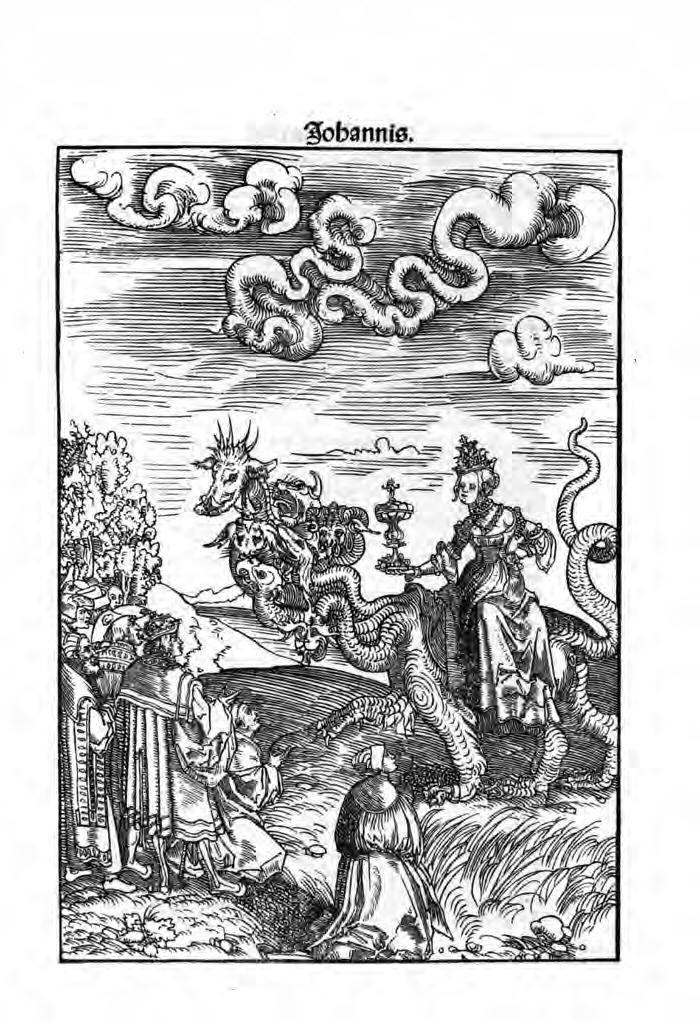
A common trope or meme of the period was to depict the Bishop of Rome as the whore of Babylon from The Book of Revelation. According to these memes, the Bishop of Rome had misled Christians away from Jesus and to the devil. This idea came to the Americas with the English.
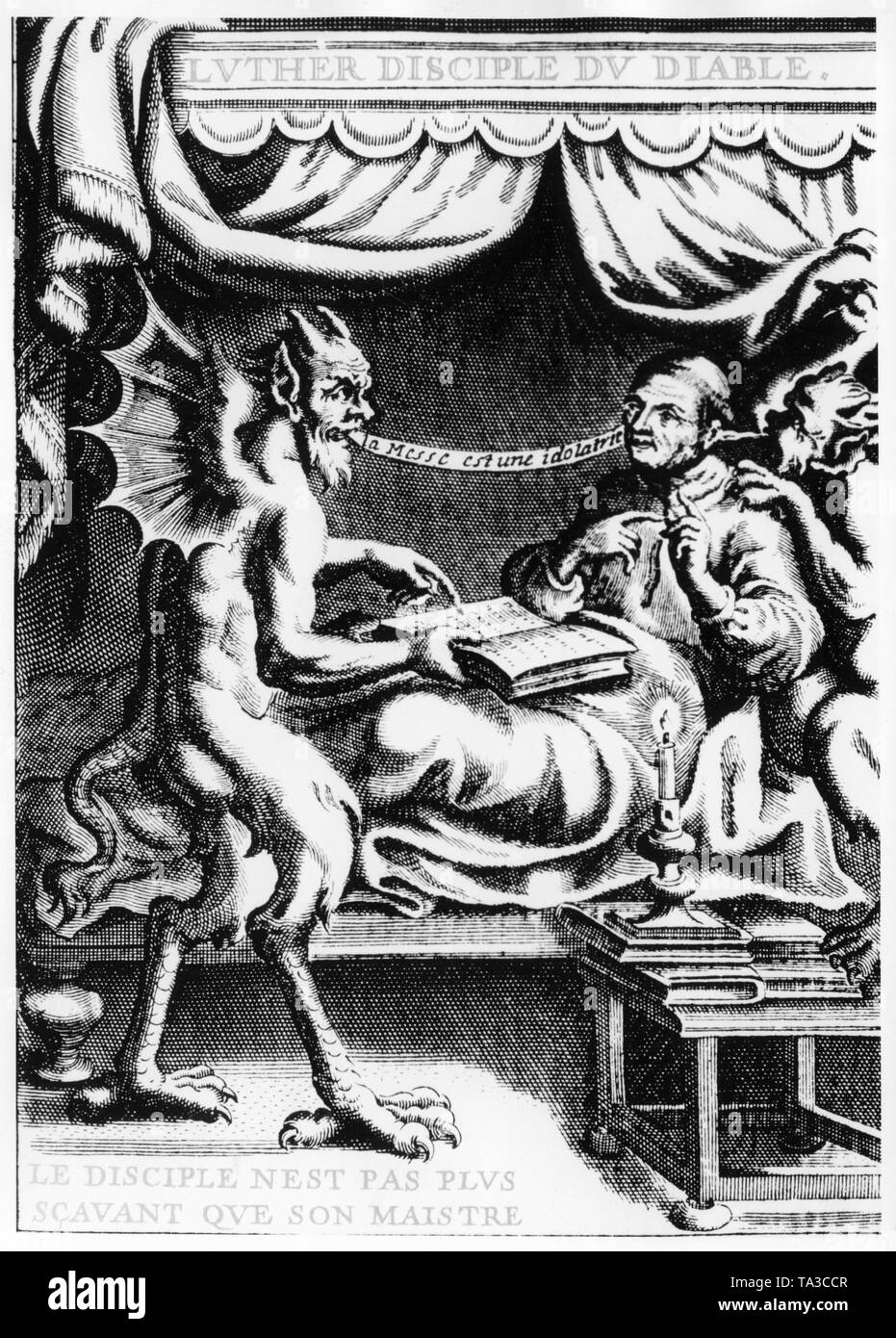
Both Anglicans and Puritans rejected the authority of the Bishop of Rome. To be an Englishman was to be against the Pope. No true patriot could be a papist. It was illegal to be a Roman Catholic in England. Roman Catholics weren’t real Christians, and English governments continued the practice of persecuting false believers.
The authors of the American Constitution knew and understood this history. They understood the false promise of government violence in the name of Christianity. The very first amendment to the Constitution protects an individual’s Liberty of Conscience. The American government would not dictate to an individual the true meaning of Christianity or any other religion. Individuals were free to speak, right, believe and practice whatever ideas lead to their own happiness.
Unfortunately we know that real history does not always percolate throughout society. Charlatans and scammers have a vested interest in creating an alternative history. A history in which Jesus talks directly to them and authorizes them to stamp out competing ideas. This practice is dangerous and will reignite civil discord and violence..
All of us have a vested interest, Christians and non-Christians alike, to keep the government out of our churches and churches out of our government. Individuals are free to pursue their own happiness as dictated by their own conscience, not as dictated by an alliance of church and state. Absolute power leads to absolute corruption.
Comments
You must be logged in to post a comment.